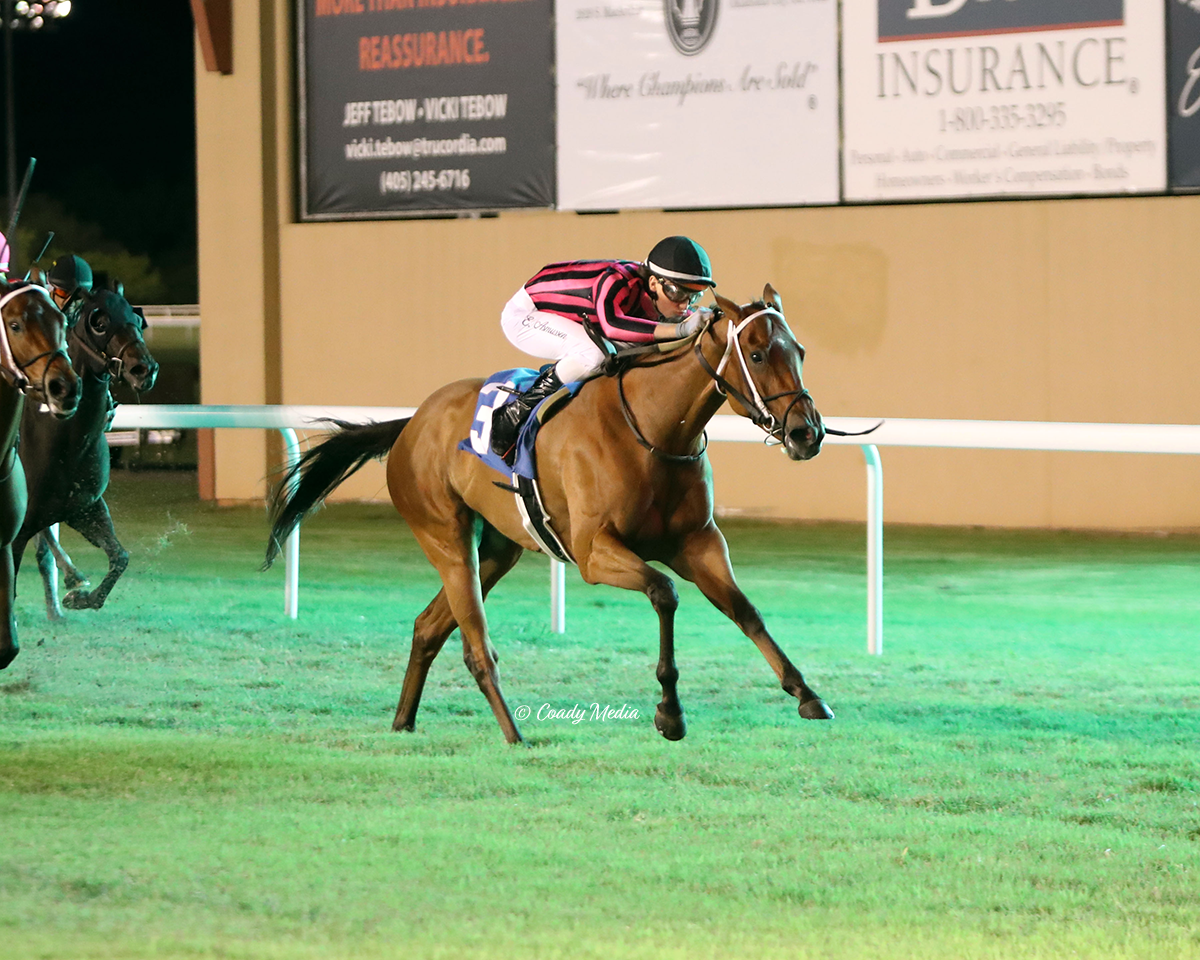
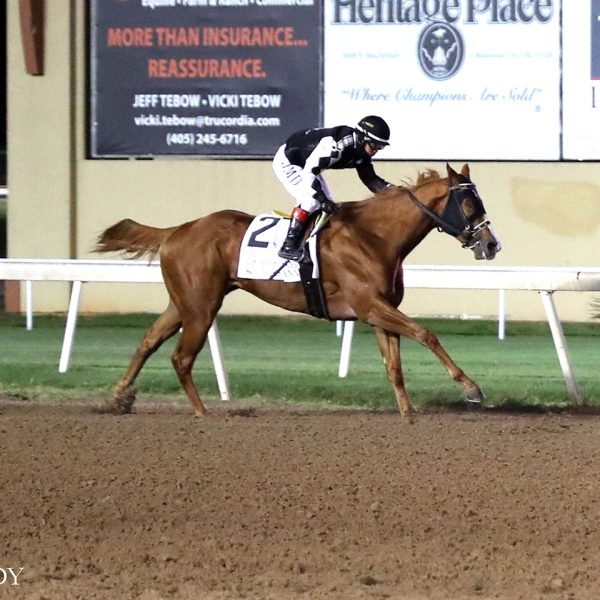
OKLAHOMA CITY – Spring In Paris (3) wins the turf sprint feature on Wednesday, October 21, 2026 at Remington Park. The score gave trainer Steve Asmussen and jockey Erik Asmussen their fourth win as a team on the night. 📸: Coady Media
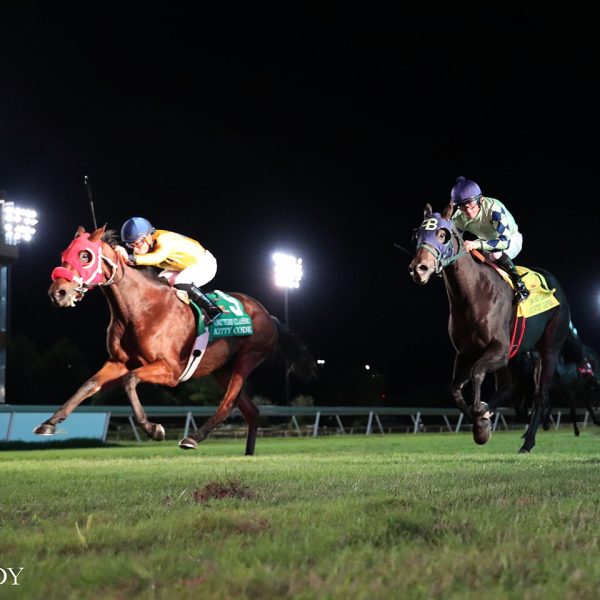
OKLAHOMA CITY – Kitty Code (5) sweeps to victory in the OKC Turf Classic on Friday, Oct. 16, 2026 at Remington Park under Walter De La Cruz. 📸: Coady Media
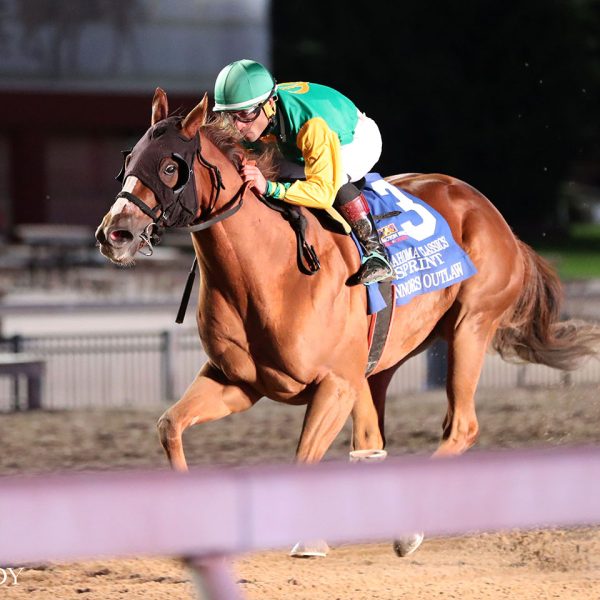
OKLAHOMA CITY – So Jacksann (2) finished second in the Oklahoma Classics Distaff Sprint on Friday, Oct. 16, 2026 at Remington Park but she was elevated to first place when the winner, Letta’s Legacy, was disqualified for interference to another rival. 📸: Coady Media
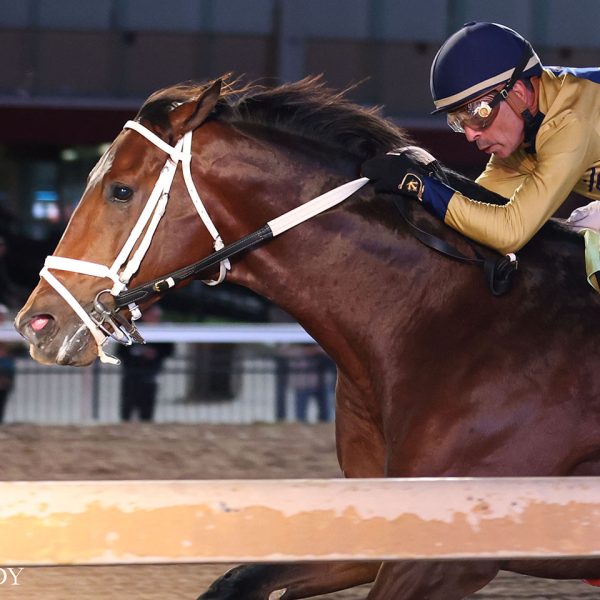
OKLAHOMA CITY – Mister Omaha (6) wins the Oklahoma Classics Cup on Friday, Oct. 16, 2026 at Remington Park. It was his second consecutive victory in the race. Jockey Luis Quinonez was up for the victory. 📸: Coady Media
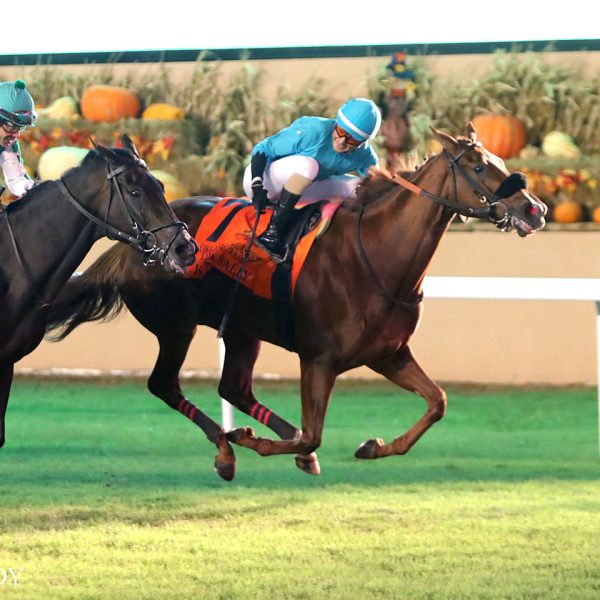
OKLAHOMA CITY – Killa Sally (7) holds off Talkin Cadee to win the Oklahoma Classcis Distaff Turf on Friday, Oct. 16, 2026 at Remington Park. Jockey David Cabrera was up for the triumph. 📸: Coady Media
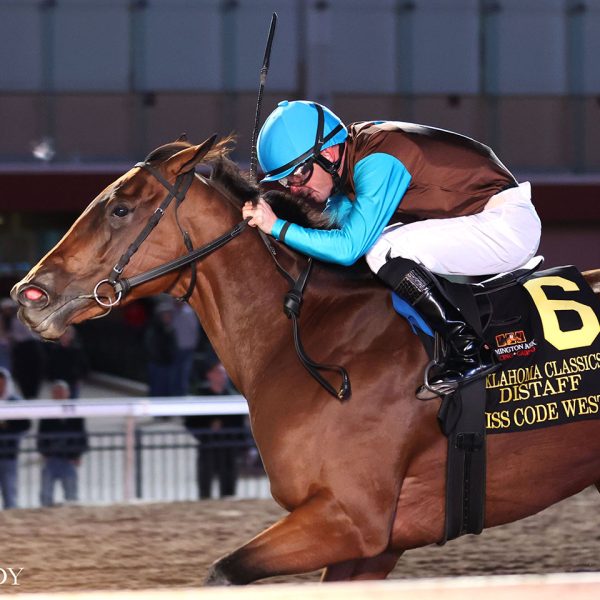
OKLAHOMA CITY – Miss Code West (6) wins Oklahoma Classics Distaff on Friday, October 16, 2026 at Remington Park under jockey Floyd Wethey, Jr. 📸: Coady Media
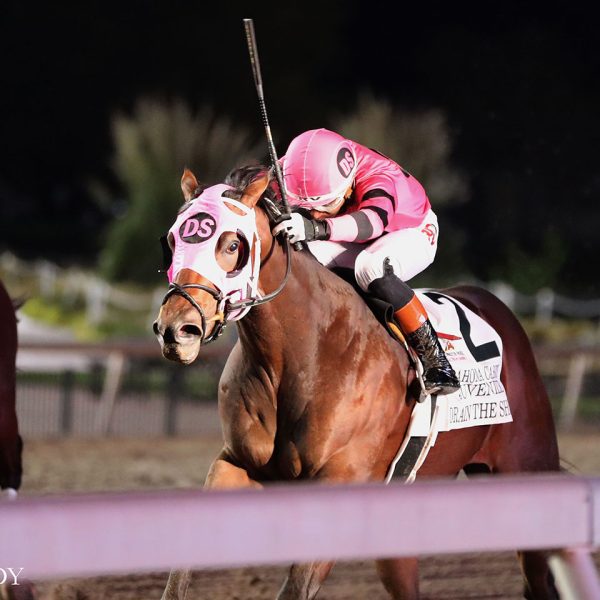
OKLAHOMA CITY – Drain The Shot wins the Oklahoma Classics Juvenile on Friday, October 16, 2026 at Remington Park under jockey Ramon Vazquez. 📸: Coady Media
CLAIMING CROWN DEADLINE REMINDER: Don’t miss the OCTOBER 25DEADLINE to make your horses eligible for the $1.1 million Claiming Crown to be run November 15 at Churchill Downs. Get more info and eligibility request forms at www.claimingcrown.com
THREESOCKS WINS SECOND CONSECUTIVE REMINGTON PARK RACE FOR OWNER-TRAINER-BREEDER C.R. TROUT, UNDER JOCKEY DAVID CABRERA
For Immediate Release Friday, October 23, 2026 by Richard Linihan
OKLAHOMA CITY – It had been 56 days since Threesocks broke his maiden at Remington Park on Aug. 28. The long layoff didn’t matter as the C.R. Trout trainee won in his first try against allowance company, taking the feature race Friday night against fellow Oklahoma-breds going six furlongs.
It was the second win in a row, despite the long layoff, for the 3-year-old Oklahoma-bred gelding by Maximus Mischief, out of the Violence mare Va Va Va Boombaby. Trout owns, trains and bred this gelding. Jockey David Cabrera took a somewhat circuitous route to get Threesocks his second lifetime victory, sitting just off the pace on the rail and then swinging wide to go around the front-runners wide down the stretch.
Threesocks had all the momentum over the front-runners in his turn for home and he drew away the easy winner by three-quarters of a length. He covered the distance in 1:10.92 on the fast track, cutting into internal fractions set by Sandthefloor of :21.92 for the first quarter-mile, :45.19 for the half-mile, and :57.68 for five-eighths of a mile.
Oddly enough, Threesocks has followed a similar pattern as his dam (mom) Va Va Va Boombaby in her racing career. She also had a long layoff between her first and second wins, breaking her maiden at Remington Park on Dec. 9, 2017 and then not running again until Sept. 1, 2018, when she faced allowance horses for the first time and then scored in that spot. She finished her career with a third-place in the Oklahoma Classics Distaff Sprint and then was retired after running sixth in allowance company on Nov. 17, 2018.
Sent off as the even-money favorite, Threesocks paid $4 to win, $2.20 to place and $2.10 to show. He earned $23,334 for Trout from the $39,000 allowance purse and improved his record to four starts, two wins and one second for a lifetime bankroll of $58,096. Rev’s Tomb (9-5 second wagering favorite) was the runner-up, and C W Dazzle (6-1) was third, another half-length back.
Threesocks had broken his maiden, going five furlongs on Aug. 28 in :58.02, winning by a head as the 1-9 favorite. Cabrera has been in the saddle for both trips to the winner’s circle.
Threesocks was Cabrera’s second win on Friday night as he tried to keep pace with leading rider Erik Asmussen, who also had two victories to maintain his seven-win lead over Cabrera in the jockeys’ standings at 50-43.
Remington Park racing continues Saturday, Oct. 24 with the first action at 6:30pm-Central. Remington Park has provided more than $429 Million to the State of Oklahoma general education fund since the opening of the casino in 2005. Located at the junction of Interstates 35 & 44, in the heart of the Oklahoma City Adventure District. Remington Park’s marquee event for 2-year-old Thoroughbreds is the Springboard Mile. A qualifying points race for the 2027 Kentucky Derby, the Springboard will be contested on Saturday, Dec. 19. Remington Park presents year-round simulcast racing and casino gaming. Guests must be 18 or older to wager on horse racing or to enter the casino gaming floor. Visit remingtonpark.com for more information.
-30-
For more information, contact: Dale.day@remingtonpark.com
Caption: Threesocks (1) wins his second consecutive race of the Remington Park season on Friday, October 23, 2026. Jockey David Cabrera was up for the triumph. Credit: Coady Media ...
Edward J. DeBartolo (at that time, the owner of Balmoral, Thistledown and Louisiana Downs) built Remington Park in Oklahoma City as a $100 million showcase for Thoroughbred racing. The inaugural race meet during the fall of 1988 was an opportunity for Oklahoma Thoroughbred horsemen to race in their home state and for horsemen from throughout the region to enjoy Oklahoma’s hospitality.





0 CommentsComment on Facebook